Investing
AI: Alternative Investments


Returns on AI investments are coming under greater scrutiny by investors. We ask the question: where else could you put your money?
Concentration
October has been a tough month for investors in companies that have benefitted from the AI boom, where markets are digesting the rising capital cost of the enormous investments in datacentres and computing chips.
Concentration risks are high: 40% of the S&P 500’s market valuation is now concentrated in the Technology sector and expectations have never been higher.
Current analyst expectations are that the S&P 500 triples earnings over the next 5 years, growing at 26% per year each year. This level of sustained growth has never been achieved before.
We’ve looked at the other options that investors can consider when putting their savings to work.
Healthcare
Global healthcare stocks have performed poorly over the last 3 years. The table below shows the cumulative price appreciation of the sector compared with the overall market index.
TABLE | Figure 2 - Total returns, FTSE All World vs MSCI World Health Care | Total Returns % | 1 year | 3 year // FTSE All World | 14 | 65 // MSCI World Health Care | 18 | 27
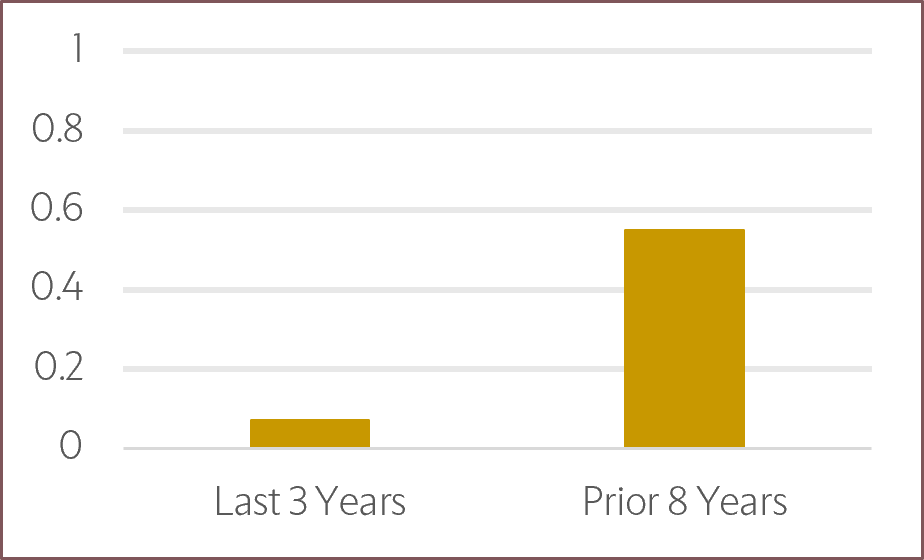
Interestingly, the correlation between healthcare companies and the AI related stocks has fallen dramatically in the last 3 years. This means that Healthcare offers more diversification now than at most times in history.
So why has healthcare performed poorly, in a relative sense?
There are two main reasons. Firstly, as by far the largest payer globally, US policy decisions are highly important for healthcare companies. Trump’s administration has been hostile with policy pressure on drug pricing.
Secondly, earnings growth has been slower than the rest of the market. We should expect this in a risk-on environment: healthcare is a defensive sector.
Trump’s executive power could diminish after the mid-term elections, which removes some of the drug pricing risk. So long as the earnings of the sector stay resilient, this sector will work to diversify portfolios.
Safe havens
There are several ‘safe’ areas in markets, where investors usually turn when risk appetites diminish.
Switzerland
Switzerland, with low inflation and very low debt-to-GDP ratios, stands out globally as a safe place for capital.
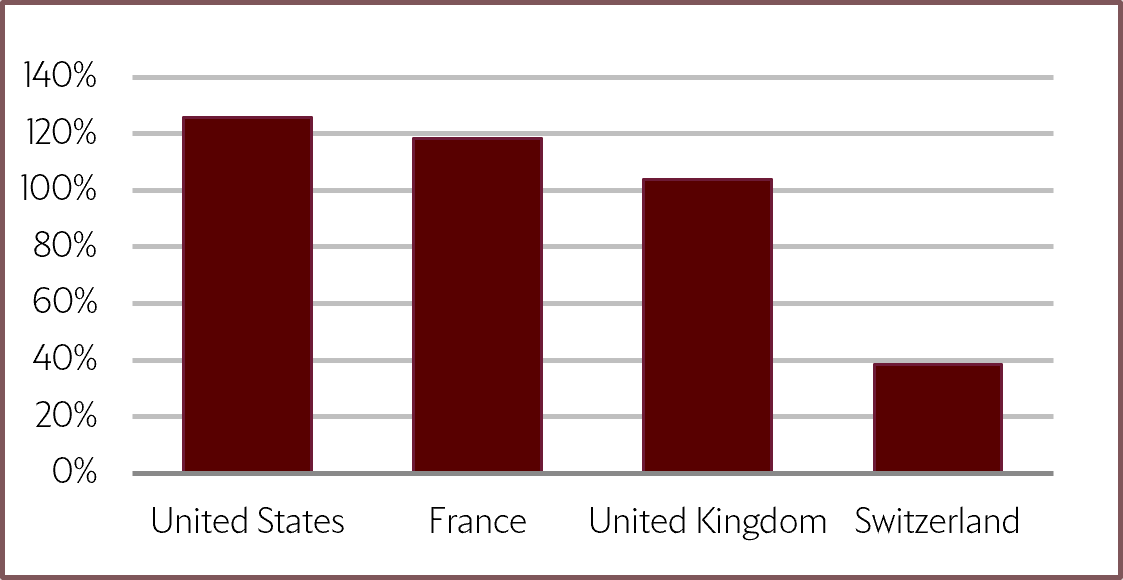
This makes it likely that the Swiss Franc would strengthen in a risk-off environment.
Coupled with the fact that the Swiss Market Index has about 40% overall exposure in Healthcare, and very limited exposure to technology, this should be a relatively safe place to be in a market turnaround.
Bonds
Being a bond investor for the last 3 years has required patience, especially as equity markets have careered higher.
We’ve seen multiple headlines this year discussing the fall in bond prices. These are accurate but miss the story of resilience – UK gilt investors have not lost significant money this year, because the income has offset the price falls.
TABLE | Figure 5 - Source Bloomberg UK Gilts Index | Total Returns % | 3 months | Year to date | Running yield // UK Gilts | +0.1% | -0.9% | 4.0%
The higher the starting yield, the more income protection that investors get against falling bond prices. Should AI expenditure fall, the pressure on global growth may cause yields to fall, benefitting bond holders.
Specifically for UK investors, the tax advantages for UK qualifying bonds make the yields and defensive qualities look like an essential exposure to hedge portfolios.
Gold
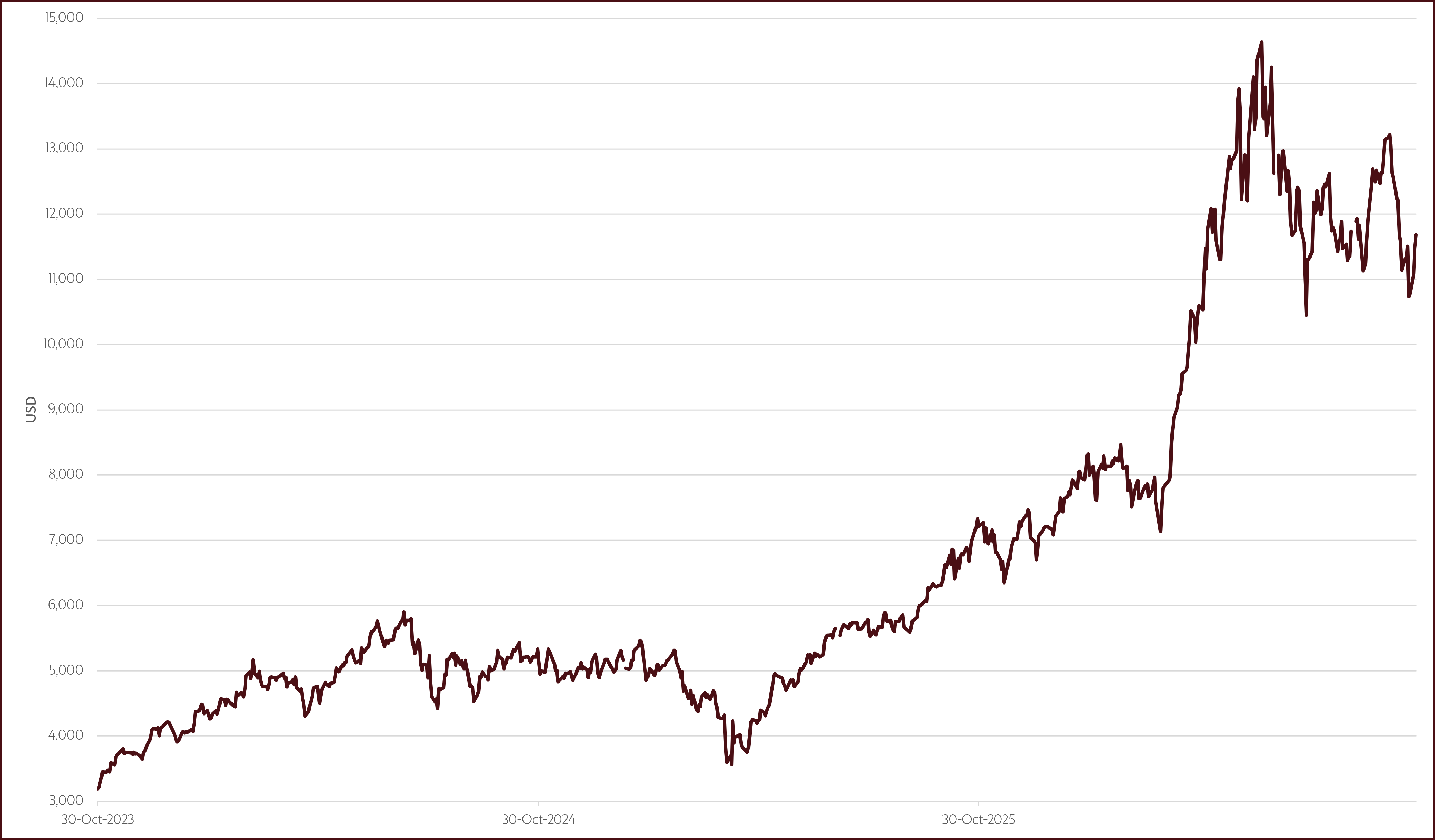
The gold price has appreciated significantly over the past 3 years.

The best historical correlation for the gold price is the path of real interest rates: that is, the expected interest returns you receive after inflation. Usually, as real yields rise, the gold price falls.
That correlation has broken in the last 3 years. Real yields have risen but so has the gold price. The main explanations for this are the concerns over the value of the dollar and central bank purchasing, especially in emerging markets, which have outweighed the classical mechanism.
Those additional drivers make the case for investing in gold much more complex, and so we think that gold will not operate as the same hedge as it has been in the past.
AI losers
An obvious question is – wouldn’t the best way to hedge the AI winners falling be to buy the AI losers?
Software companies have been the main ‘loser’, with concerns mounting that their competitive advantages will get eroded by coding capabilities of major AI models.
But an AI bubble burst scenario won’t mean that the new technology disappears. No-one has put it better than Buffett in this regard:
“What you really should have done in 1905 or so, when you saw what was going to happen with the auto is you should have gone short horses.” – Warren Buffett
Software may be the horses of the 21st century, and the doubts investors have developed about software business models are difficult to dispel.
This article is for information only and does not constitute personal financial advice. The value of investments can fall as well as rise and you may get back less than you invested. Past performance is not a reliable indicator of future results.